

TEACHER TRAINING

First and foremost this is a 350 hour training vs a 200 hour training. A 350-hour yoga teacher training is for people who want to go beyond basic certification and truly master the art, philosophy, and teaching of yoga.
Embodied Spirituality and Activism for yoga teachers.
This 350-Hour Yoga Teacher Training provides a strong foundation in yoga philosophy, practice, activism and highlighting teaching methodology as well as responding to the state of our world, guiding YOGA TEACHERS to embrace radical spirituality and courageous service IN ACTION. Graduates will gain the knowledge, confidence, and practical skills needed to teach safe, inclusive, and inspiring yoga classes. YOGA IN ACTION invites you to teach, practice, and show up radically in response to today’s challenges. To return to the essence of spiritual practice. Honour yoga as a path of true liberation—personal and collective.
This training has a big emphasis on the practical side of teaching from the very beginning of the training, encouraging participants to step into the role of the teacher and finding their teacher voice. I, Karo (Senior Yoga Teacher/Course Leader) feel that a lot of YTT courses do NOT give you the practical tools for actual teaching, but will bombard you with a lot of information, not really checking if that information actually lands or resonates. Plus most courses cater to large groups (when I did mine, I had 65 people in the course with me) but in this YTT spaces are limited, specifically with that in mind, ensuring an immersive, transformative and personal learning experience, with lots of individual attention and extra support for all attending. Minimum 6, maximum 12 participants.
Quick checklist before choosing this YTT:
• Accreditation: (Karo) holds an accreditation with Yoga Alliance Professionals.
• Check the curriculum/syllabus
• Look at the schedule and make sure you are available for all dates!
• Have a good look at Karo’s website and her experience
• Make sure the style and philosophy of this TT and Karo resonates with you deeply.
Any questions please email: karo@karotak.com

YOGA IN ACTION: 350 HR TEACHER TRAINING with Karo Tak
YOGA IN ACTION: BE THE CHANGE!
Spiritual Activism on and off the mat
Program Overview:
Embodied Spirituality and Activism for yoga teachers.
This 350-Hour Yoga Teacher Training provides a strong foundation in yoga philosophy, practice, activism and highlighting teaching methodology as well as responding to the state of our world, guiding YOGA TEACHERS to embrace radical spirituality and courageous service IN ACTION. Graduates will gain the knowledge, confidence, and practical skills needed to teach safe, inclusive, and inspiring yoga classes. YOGA IN ACTION invites you to teach, practice, and show up radically in response to today’s challenges. To return to the essence of spiritual practice. Honour yoga as a path of true liberation—personal and collective.
Yoga teachers hold the power to speak truth and encourage collective action.
This program nurtures that power through rigorous (self) study, reflection, practical tools and lived examples—helping participants to become activist souls, determined to serve the world as yoga teachers, not just asana instructors. This training has a big emphasis on the practical side of teaching from the very beginning of the training, encouraging participants to step into the role of the teacher and finding their teacher voice. This course really is for TEACHERS, encouraging those who already are teachers and those who aspire to become one. This is NOT A RETREAT, or IMMERSION or a course to DEEPEN YOUR PRACTICE, which you will most certainly experience, but always from the perspective of the teacher’s seat.
Spaces are limited, ensuring an immersive, transformative and personal experience, with lots of individual attention and extra support for all attending. Minimum 6, maximum 12 participants.
This 350hr (with independent study required) course presents a foundation in yoga principles with a strong emphasis on vinyasa. The duration of the training is spread out into 8 modules, over 12 months, mostly on weekends. The course will be taught mainly by Karo with a few guest teachers. A set sequence will be provided approximately 1 month prior to the first module and students will be expected to self-practice this sequence approximately 3x per week and know it by the first module. Developing a self-practice, identifying and overcoming challenges are an important step in the teacher trainee’s ability to teach and ultimately communicate with experiential insight, anatomical detail and refined precision.
SYLLABUS:
Module 1: Foundations of Yoga (20 Hours)
• History and evolution of yoga
• Major yoga traditions and lineages
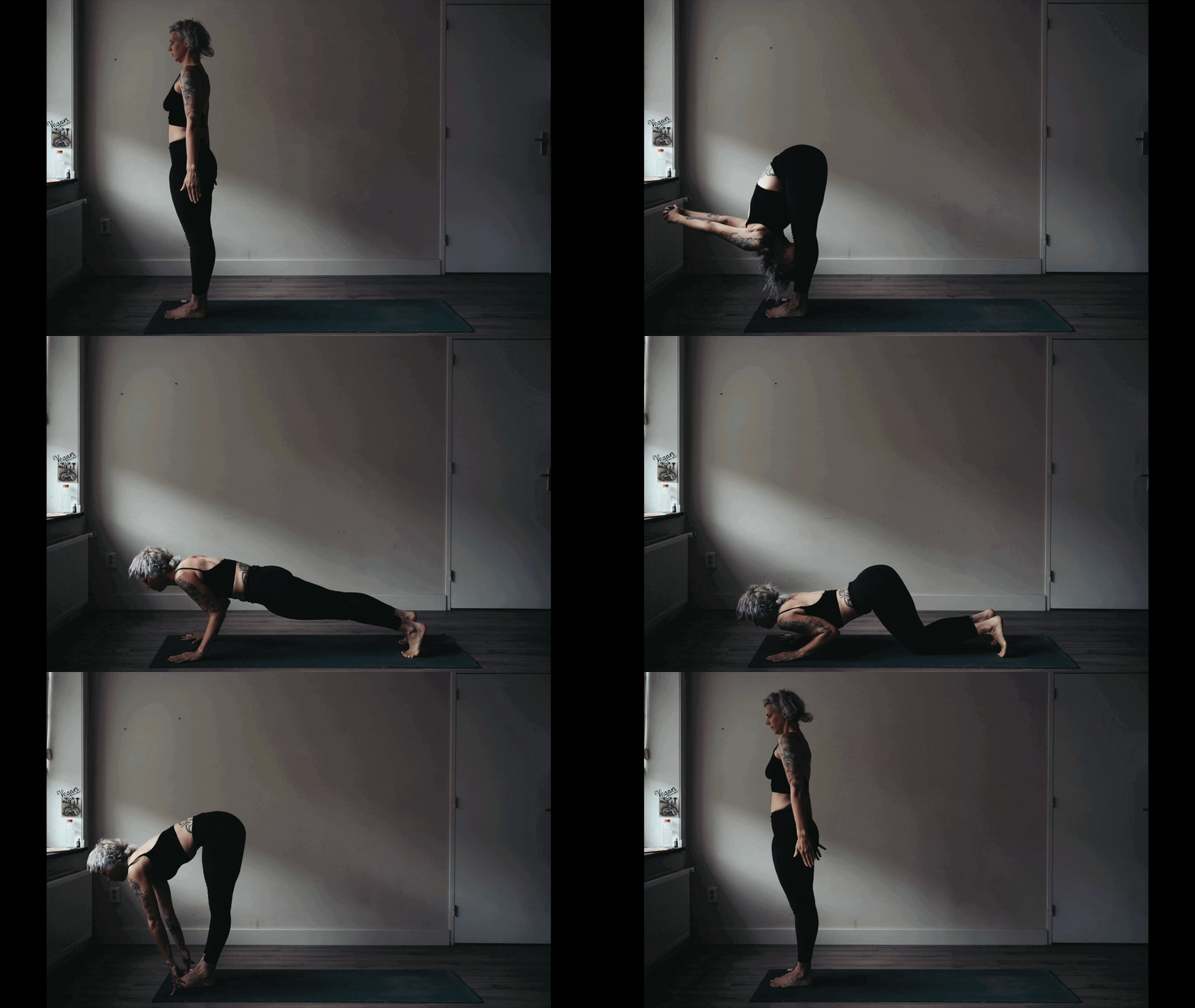
• Teaching Surya A (warm up) in class
• Introduction to yogic lifestyle and ethics
• The role and responsibility of a yoga teacher
• Introduction to Sanskrit (includes homework and assignment)
Module 2: Yoga Philosophy & Ethics (30 Hours)
• The Eight Limbs of Yoga (Yoga Sutras of Patanjali)
• Yamas and Niyamas in modern life
• Bhagavad Gita overview
• Introduction to Ayurveda
• Yoga and Veganism
• Politics and Activism
• Ethics, boundaries, and professionalism
• Cultural appreciation vs. appropriation
Module 3: Asana Practice & Technique (60 Hours)
• Alignment principles for foundational postures
• Standing, seated, supine, prone, arm balances, and inversions
• Modifications and variations for different bodies
• Use of props (blocks, straps, bolsters, blankets)
• Safe entry, exit, and transitions
• Hands-on and verbal adjustments (with consent)
• Teaching Surya B (warm up) in class
• ICP (In Class Privates) in class (x5)
Module 4: Anatomy & Physiology (30 Hours)
• Skeletal and muscular systems
• Functional movement and joint safety
• Common injuries and contraindications
• Breath mechanics and posture
• Anatomy of key yoga poses
• Understanding individual anatomical differences
Module 5: Pranayama & Subtle Body (15 Hours)
• Breath awareness and regulation
• Foundational pranayama techniques
• Chakras, nadis, and energy flow
• Bandhas and mudras
• Introduction to meditation practices
Module 6: Teaching Methodology (40 Hours)
• Class structure and sequencing principles
• Cueing: verbal, visual, and energetic
• Voice, presence, and teaching confidence
• Inclusive and trauma-informed teaching
• Creating themes and intentions
• Teaching beginners vs. mixed-level classes
Module 7: Practicum & Teaching Practice (65 Hours)
• Practice teaching to peers
• Receiving and offering constructive feedback
• Observing classes
• Sequencing and teaching full classes
• Self-reflection and teaching refinement
Module 8: Business of Yoga (15 Hours)
• Yoga as a profession
• Finding teaching opportunities
• Branding, marketing, and social media basics
• Legal considerations and insurance
• Continuing education and career pathways
PLUS: 75 Non contact/study hours
Graduation Requirements
• Minimum attendance of required hours
• Completion of reading assignments
• Teaching practicum and evaluation
• Final written or practical assessment
• Demonstrated understanding of yoga ethics
Required Reading
• Skill in Action - Michelle Cassandra Johnson
• A Queer Dharma - Jacoby Ballard
• The Tree of Yoga - B.K.S . Iyengar
Attendees must write an essay/spiritual commentary on these three books before course starts.
Read Only (used as constant resources during the course)
• Yoga Assists - Sharon Gannon and David Life
• Jivamukti Yoga - Sharon Gannon and David Life
• YOGA the art of assisting - Brian Cooper
• Light on Yoga - B.K.S. Iyengar
Resourceful Reading:
• The Yoga Teachers Survival guide - Theo Wildcroft and Harriet McAtee
• Teaching Yoga Beyond the Poses - Rountree and Desiato
• The Spiritual Activist - Claudia Horwitz
The Read Only and Required Reading books must be purchased before the start of the course (this is not included) and it’s highly recommended to also purchase the Resourceful Reading as they will be such valued resources for the future.
The TT Manual will have an extensive Recommended Reading List as well.

YOGA IN ACTION with Karo: 350 HR TEACHER TRAINING in Amsterdam
2026/2027 COURSE SCHEDULE: Oct 26 – Oct 27
Weekends: Friday 3 hrs (6 to 9 pm) Saturday and Sunday (9 to 6 pm)
Module 1 (20 hrs): 23rd/24th/25th October (1 weekend)
Module 2 (30 hrs): 7th and 8th of November and 27th and 28th of November (2 weekends)
Module 3 (60 hrs): 6th of December + 12th/13th of December - 9th/10th of January + 23rd/24th of January (4 weekends)
Module 4 (30 hrs): 13th/14th of February + 27th/28th of February (2 weekends)
Module 5 (15 hrs): 13th/14th of March (1 weekend)
Module 6 (40 hrs): 10th/11th + 24th and 25th of April (2 weekends)
Module 7 (65 hrs): 5th/6th + 12th/13th of June 3rd/4th of July (3 weekends) plus 15 hours self practice
AUGUST: Summer break
Module 8 (15 hrs): 11th/12th of September
Graduation Classes: 24th/25th/26th of September + 15th/16th/17th of October
Tuition: € 5750
Early bird: € 5500 1st June – fully paid (payment plans available within reason)
Pre-course work (including 90 minute asana sequence and anatomy online course) will be provided on/around September 1st as preparation and to be completed for upcoming modules.
OBJECT TO CHANGE. Modules might be swapped around, according to the availability of guest teachers, please bare that in mind, the schedule might change a little with that in mind.

COURSE OBJECTIVES
At the end of the course, it is expected that you will have the tools & techniques to:
• be knowledgeable in vinyasa yoga framework, sequencing and components
• teach a solid vinyasa class
• demonstrate a good understanding and application of Yoga philosophy
• learn the art of observation and assists within an asana practice
• become knowledgeable about the foundation and philosophy of Yoga
• contemplate and apply ethical conducts
• learn Sanskrit names for asanas contained within the sequence and know correct pronunciation of select sutras/chants
• feel confident and at ease with your own capacity as a teacher
PRE-REQUISITES
Practitioners are expected to have a minimum 3 years of a strong yoga practice before they can be considered and possibly accepted onto this course. It is also helpful for students to have a basic understanding of yoga through the required reading list. Practitioners must understand the importance of a compassionate diet and the ethical conduct as outlined by the yama/niyamas. They must also demonstrate/express an interest in (political) activism.
Weekly attendance of classes taught by Karo is expected over the course of the training dates, trainees will need to keep a practice log to keep track of the hours. This is to be able to check in with the trainee’s practice on a regular basis and to also become familiar with sequencing by direct experience. The TT Faculty/ Karo is responsible for ensuring and checking the practice log and making sure that the required number is met by the end of the course in order to pass (approximately 14 inclusive of modules). Needless to say, the more classes attended, the greater depth of experience during this entire TT program.
Successful applicants should be in good health and have stable personal circumstances to complete this course with the focus and dedication it requires. Please think seriously about the commitment involved in undertaking this course and ensure you can attend the dates, fulfil the assignments and requirements on top of your current job/responsibilities/lifestyle.
APPLICATION PROCEDURE
This course is designed very specifically with the Amsterdam (Westies Besties Yogis) Community in mind, hoping to attract people from that specific community and create a new generation of great teachers within that community and city, so the community can keep expanding, with true, authentic yoga teachers who respect and understand lineage (parampara) and value the true teachings of yoga.
However for those who are not directly in this community, you are very welcome to apply! You must reside in Amsterdam and be able to be present face to face for all modules, this is not a virtual or hybrid course, but a live one!
Please email to register your interest and receive the application form: karo@karotak.com
Applicants will also be asked to submit two reference forms:
1. current yoga teacher or main teacher of 2+ years
2. personal reference
Plus a written essay why you want to do this Teacher Training.
Application fee: € 30 (cash brought to assessment + interview)
The application fee covers: review of completed application, practice assessment (does not include class fee), 15-20min interview.
1st – Review all requirements to ensure eligibility is met and that course dates work with your availability (no more than 3 days during the entire course can be missed).
2nd – Request the application/reference forms. Confirm that the required number of exploratory classes attended have been met (if not a regular student of Karo) before submitting completed forms.
3rd – Submit all forms and while awaiting practice assessment/interview date, we strongly advise interviewing past mentees who have done the 80 and 100 hr mentorship courses with Karo about their experience.
PRE-REGISTRATION REQUIREMENTS
All applicants must have attended an absolute minimum of 3 classes with Karo before submitting an application form (no exceptions). After submitting the application form, prospective trainees will be required to attend class for an assessment, to better understand their asana practice and to best assess whether suitable to participate in this course. Please email to pre-register for the class and also to confirm availability for an interview afterwards – applications must be received one week prior + practice assessment must happen before interview.
EVALUATION PROCEDURE
Before the Course:
• Informal interview/assessment of practice after submission of application form
• Essays – 1 submitted after application approval and invited to participate: CHOOSE A SUTRA from the Yoga Sutras of Patanjali. It is due before the start of the course, alongside the book essays/spiritual commentaries, no later than the first module.
• Completion of anatomy modules (online) & pre-course reading
During the Course:
• Attendance log for classes, meditation, journal keeping
• Teaching development – trainees will be assessed on their ability of teaching a led class, including safe and foundational adjustments (assists)
• Practice development – students will be assessed on their own practice/development with the set sequence provided
• Mid-term and final written assessment
ATTENDANCE
Students should attend a minimum of 90% of the course to complete. Should students miss more than this minimum, they will need to agree with the teacher on which modules to re-take. Additional fees will apply for any catch up modules that would require scheduling a private session.
There is a time limit (once the course finishes) to complete: 30 days – exceptions for family emergencies, health reasons, etc. Extensions may be granted if the student is unable to complete the requirements due to unforeseen circumstances.
Students are expected to maintain an asana practice of 4-5 days a week for the duration of the training (1x week in a class environment with Karo and 2-3x self-practise with the sequence provided).
MATERIALS
The course will provide a printed workbook/manual. Additional reading material will be provided during the course. Students are expected to read the three books required to write an essay before the start of the course. These books will need to be purchased separately and are not included in the cost of tuition.
ACCREDITATION
This training has met the stringent requirements set by Yoga Alliance Professionals, demonstrating that the course is of the highest standard and that our graduates may use the title ‘Registered Yoga Teacher’ RYT as a sign of quality training when they register themselves with Yoga Alliance Professionals.’ Karo Tak is registered as a Senior Yoga Teacher with Yoga Alliance Professionals.
BOOKING
After your application has been reviewed and you receive an invitation to join the course, a non-returnable deposit of € 500 is necessary to secure a place and should be paid at the time of the booking. The invitation will be valid for 14 days from receipt. The full fee must be paid by the course start date, unless alternative payment options discussed, in advance, with Karo.
Applications will be taken on a ‘first come first served’ basis and students who have paid their deposit will have priority over those who have not. We reserve the right to refuse a place to students who have not paid their deposit or full fees by the required date. The fees must be paid in full and any private sessions paid for before a graduation certificate will be issued.
WHAT FEES INCLUDE / WHAT IS NOT INCLUDED
Included:
• Training and assessment by a qualified Yoga Alliance Professionals Senior Yoga Teacher
• A manual and other appropriate manuals/paperwork
• Anatomy Course registration
• Specialist Guest Teachers
• A potentially life changing experience…and vegan snacks
Not included:
• This is not a residential course; therefore, accommodations, meals etc are not covered.
• Classes, workshops with Karo.
• Insurance: RECOMMENDED by start of course (you can purchase this from Yoga Alliance Professionals).
• A certificate (paying the fees does not guarantee you a certificate as you will need to successfully pass all assignments and attend a minimum of 90% the course).
• Books from the reading list.
TUITION INVESTMENT & REFUND POLICY
Course investment: € 5750 Please email if you need to discuss a payment plan. Karo/Faculty is amenable to making this work for you financially, within reason.
DEPOSIT
To secure your space a non-returnable deposit of € 500 is required upon booking. The balance is due before the course start date. Payments may be made in cash, or direct bank transfer.
These costs include all tuition, a manual as well as final exam classes and your teaching diploma. In addition you will need to purchase the books listed on the reading list.
CANCELLATION & REFUND
The full amount must be paid before the course start date. No refunds will be given after the start of the course. The initial deposit is non-refundable.
Course leader reserves the right to cancel the course in advance if a minimum number of students are not registered. The course has a minimum of 6 and a maximum of 12 students.

1. Purpose
This Code of Conduct exists to create a safe, respectful, inclusive, and professional environment for all participants in the Teacher Training. It supports a learning space grounded in integrity, personal responsibility, taking accountability and care for the community.
⸻
2. Core Values
All participants agree to uphold the following values throughout the training:
• Respect for all people, identities, and lived experiences
• Non-harm (Ahimsa) in words, actions, and behavior
• Integrity in teaching, learning, and communication
• Accountability for personal choices and impact
• Confidentiality and emotional safety
• Inclusivity regardless of race, ethnicity, gender identity, sexuality, age, ability, religion, or body size
⸻
3. Respectful Conduct & Communication
Participants must:
• Speak and behave respectfully
• Avoid gossip, harassment, bullying, intimidation, or discriminatory language
• Practice active listening and allow others to speak without interruption
• Be mindful of tone, body language, and group dynamics
• Handle disagreements directly, calmly, and constructively
Hate speech, verbal abuse, or repeated disruptive behavior will not be tolerated.
⸻
4. Consent & Physical Boundaries
Yoga involves physical movement and, at times, physical adjustments. Therefore:
• Consent is required before giving or receiving any hands-on adjustments
• Trainees may decline adjustments at any time without explanation
• Teachers and trainees must respect personal space and boundaries
• Touch of a sexual nature is strictly prohibited
• Any unwanted physical contact must be reported immediately
⸻
5. Professionalism in Teaching Practice
During practice teaching and class facilitation, trainees agree to:
• Teach with humility, clarity, and care
• Avoid making medical claims or diagnosing conditions
• Refer students to qualified professionals for medical or mental health concerns
• Stay within the scope of yoga teaching and personal competence
• Use inclusive language and avoid body shaming or appearance-based comments
⸻
6. Confidentiality & Emotional Safety
Training may involve personal sharing, group discussions, and emotional experiences.
Participants must:
• Keep personal stories shared in training confidential
• Not record or share private discussions outside the group
• Avoid pressuring others to share personal information
• Respect emotional boundaries and avoid unsolicited “therapy-style” advice
⸻
7. Inclusivity & Anti-Discrimination
This training is committed to equitable participation. Participants agree to:
• Respect all identities and lived experiences
• Avoid assumptions about bodies, culture, ability, gender, or beliefs
• Use correct names and pronouns
• Not engage in racist, sexist, homophobic, transphobic, ableist, or otherwise discriminatory behavior
Discrimination of any kind is grounds for removal from the program.
⸻
8. Attendance, Punctuality, and Participation
Participants are expected to:
• Arrive on time and prepared
• Attend all required sessions unless excused
• Participate actively and respectfully in discussions and practice
• Notify Karo/Faculty in advance if absence is unavoidable
• Avoid excessive phone use during sessions
Repeated absences may affect certification eligibility.
⸻
9. Substance Use Policy
To ensure safety and clarity in learning:
• Participants must not attend sessions under the influence of alcohol or recreational drugs
• Substance use during training hours is not permitted
• Prescription medication should be used responsibly and privately
Violation may result in immediate dismissal from the program.
⸻
10. Social Media and Public Representation
Participants agree to:
• Represent the training program respectfully online
• Avoid posting photos or videos of others without consent
• Not share copyrighted training materials publicly
• Avoid making harmful or defamatory public statements about fellow trainees or faculty
Constructive feedback should be shared directly with program leadership.
⸻
11. Use of Training Materials & Intellectual Property
All manuals, recordings, sequencing templates, and curriculum content are for training use only unless stated otherwise.
Participants may not:
• Copy, distribute, or sell materials without written permission
• Record sessions without approval
• Use the training name/logo for commercial use without consent
⸻
12. Financial and Administrative Responsibility
Participants must:
• Meet payment deadlines (unless a payment plan exists)
• Respect refund and cancellation policies
• Communicate promptly about financial concerns
• Return borrowed props or materials in good condition
⸻
14. Safety and Injury Prevention
Participants agree to:
• Practice within personal limits and avoid pushing through pain
• Inform faculty of injuries or medical conditions that may affect participation
• Follow safe alignment and trauma-informed guidance
• Respect when teachers advise modification or rest
Yoga is not a competition.
⸻
15. Reporting Concerns and Violations
Concerns may be reported confidentially to program leadership.
Reports may include:
• Harassment, discrimination, or bullying
• Boundary violations or inappropriate touch
• Safety concerns
• Repeated disruptive behavior
• Ethical misconduct
The program commits to taking all reports seriously, responding promptly, and maintaining confidentiality as much as possible.
⸻
16. Consequences of Misconduct
Violations may result in:
• Verbal or written warning
• Required mediation or corrective action
• Temporary suspension from training activities
• Removal from the program without refund
• Denial of certification
Severe misconduct (harassment, discrimination, assault, retaliation) may result in immediate removal.
⸻
17. Agreement
By participating in this Yoga Teacher Training, each individual agrees to uphold this Code of Conduct and contribute to a safe, respectful, and supportive learning environment.